
"Train, educate, break down taboos to be able to take action."
�
�
Hello, I'm Amélie Watelet, Head of Human Resources at AXA France.
�
How has the perception of mental health evolved at AXA France?
Mental health is an issue that concerns us all, both in the workplace and in society as a whole. It is a topic that has been designated a major national cause in France this year. Its importance is growing rapidly, with one in five people now affected by mental health issues, which is the leading cause of long-term sick leave.
What does this tell us? It is a subject that needs to be better understood, destigmatized, and better supported. Businesses have a key role to play. That is why we have been working on this issue for several years.
�
Why is mental health a strategic issue for AXA France?
Mental health is a strategic challenge for companies in terms of what it allows them to cultivate: a caring work environment where employees can engage in both physical and mental health.
The first thing is to ensure that all key players are well trained, able to understand this subject, and able to support it. Training plays a key role. Key players in HR, HR teams, occupational health services, and management must be trained to use all available indicators—such as absenteeism indicators and internal surveys—to fully understand the situation.
�
What measures are you putting in place to raise awareness of mental health at AXA France?
Since 2023, we have implemented a number of measures. The first is training and raising awareness among senior management, managers, and teams in the field, by creating a network of mental health first aiders that will soon bring together 400 employees certified in PSSM (Premiers Secours en Santé Mentale, or Mental Health First Aid). We firmly believe that providing close support to employees who need it is a solution for prevention and support.
This year, we also decided to roll out a mandatory training course called "The Mental Health Odyssey," which helps all employees understand four major mental health conditions: stress, anxiety, burnout, and depression. The aim is to gain a clear understanding of the different manifestations of these conditions and how to provide support. Because understanding and being educated means being able to act, prevent and support.
�
What impact have these actions had on your teams and your management culture?
This mental health policy helps to destigmatize, break down taboos, and open up spaces for dialogue around this fundamental topic.
I believe that this culture and these actions around mental health contribute to building evidence that helps attract and retain the best talent, and showcase the corporate culture that is part of our DNA at AXA France.
�
How do you feel about the growing importance of mental health in HR and management discussions at AXA France?
The fact that mental health is becoming more prominent in managerial conversations, and perhaps even sometimes around the coffee machine, simply means that employees need support during important moments in their lives.
Beyond offering a diverse culture where everyone can join the company as their unique self, we want to provide extremely practical support during these moments in life. This is also the glue that binds our corporate culture and our ability to combine collective performance with individual career paths for each and every employee.
�
What message would you like to convey to your peers or to leaders of other companies?
Take control of mental health!
This issue is here, and it cannot be ignored. Our responsibility is to educate, prevent, and support.
Because it is a matter of performance, a matter of corporate culture, and a matter of attracting and retaining talent. I firmly believe that taking a pragmatic approach to this issue, using the indicators available, and developing prevention plans that address the specific challenges of each business, depending on the sector of activity, is a concrete response that will enable us to tackle the issue.
�
What would be your motto for promoting mental health in the workplace?
Train, educate, break down taboos to be able to take action.
�
�
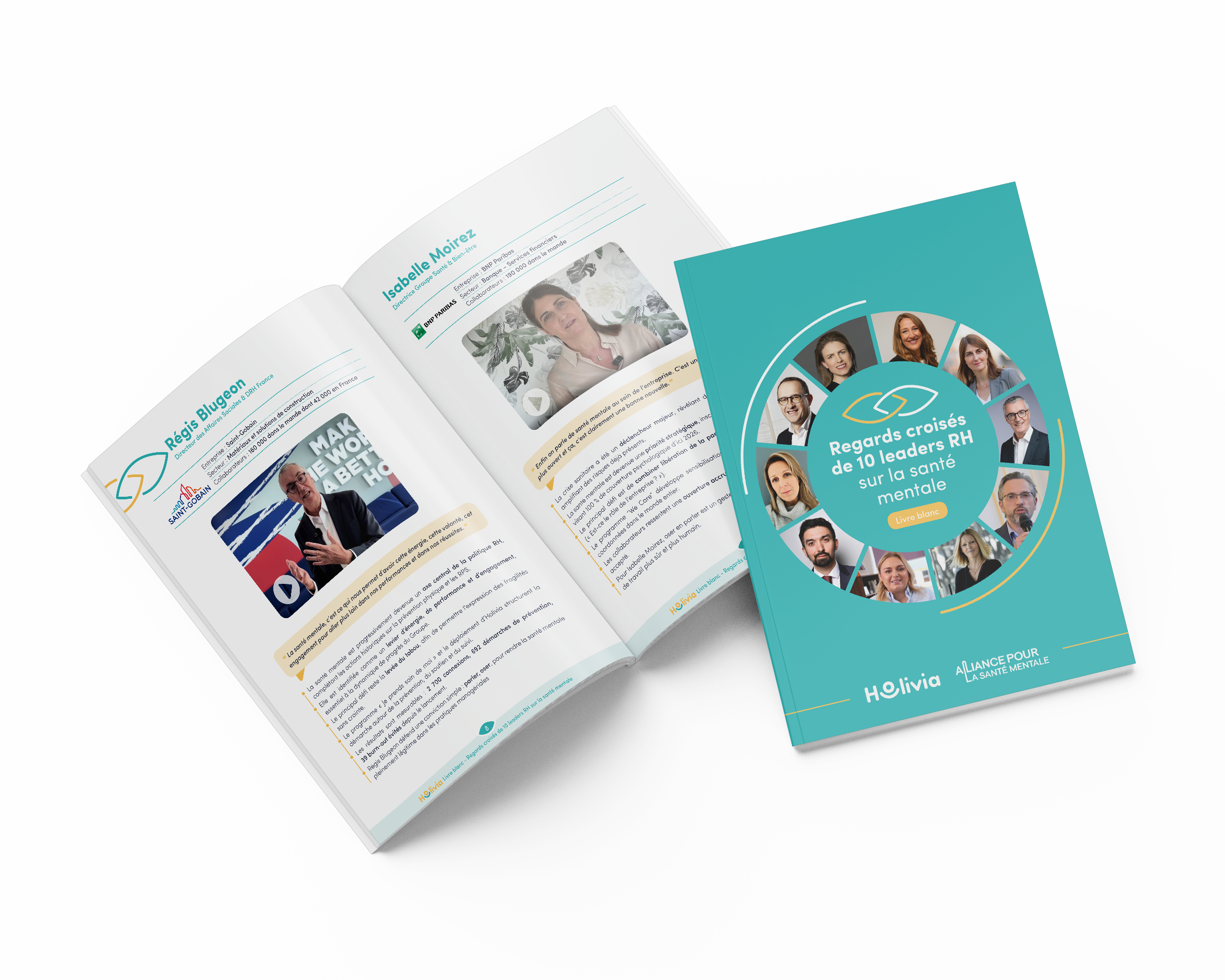
Other HR leaders shared the transformation they are bringing about in their companies. Discover the interviews conducted in 2025, the common dynamics observed, and our recommendations for action in our latest book: Perspectives from 10 HR leaders on mental health.
�









.png)